Formation of Soof
Abu Dhabi Pavilion, London Design Biennal, 2023, London Design Biennal Medal Winner
Clients: House of Artisans, Abu Dhabi
Curatorial Team: Azza Alsharif, Zeina Barto, Reem Alhosani, Shamma Al Mansoori
Contractor: Devoto Design
Surface: 36sm
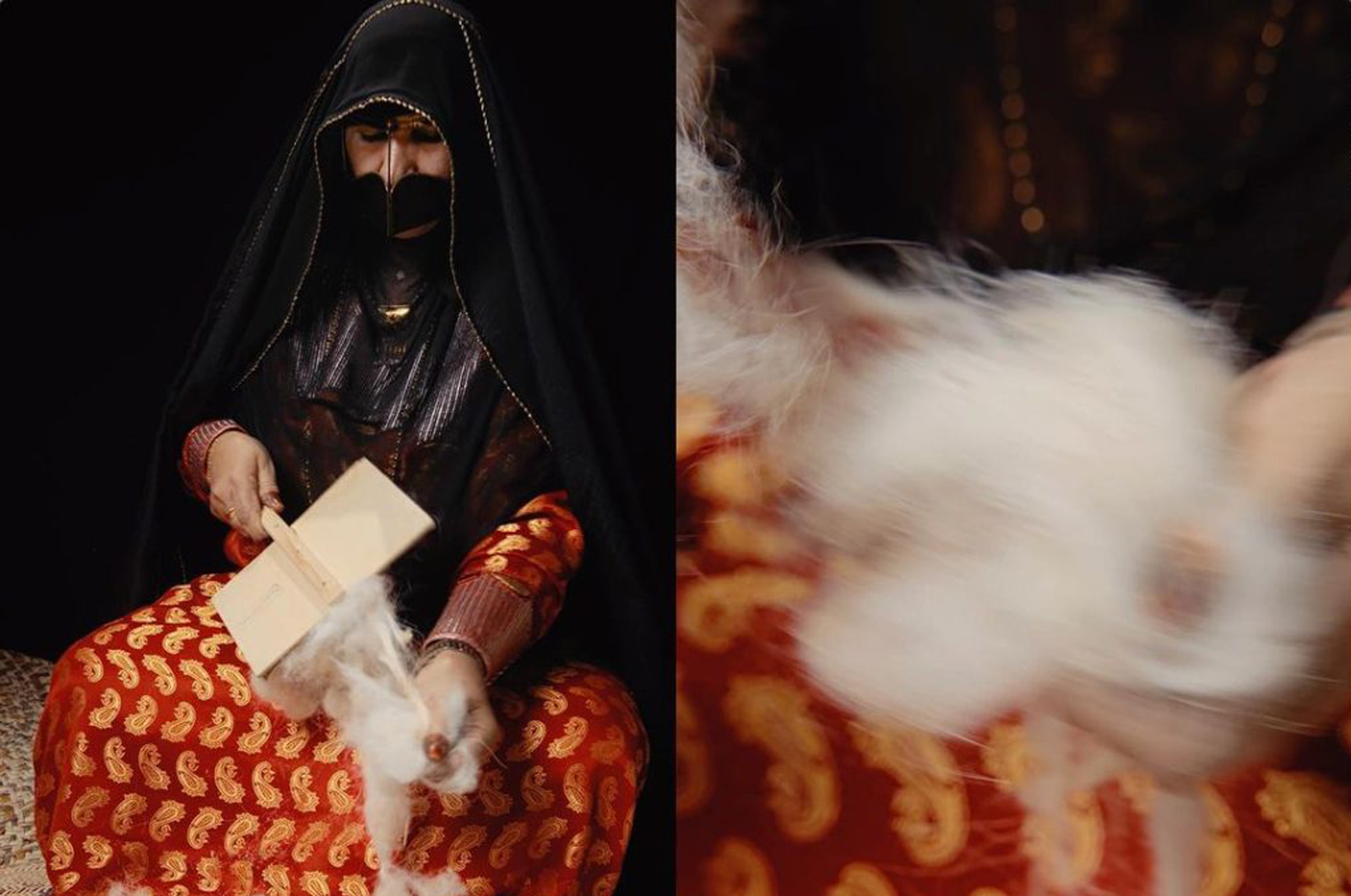



The exhibition centers on the production of Al Sadu, a traditional fabric woven from raw sheep’s wool. Over the centuries, desert nomads have developed tools to accelerate this process. Among these, the spindle—used to spin raw wool into threads for weaving—served as the inspiration for the design of the installation.
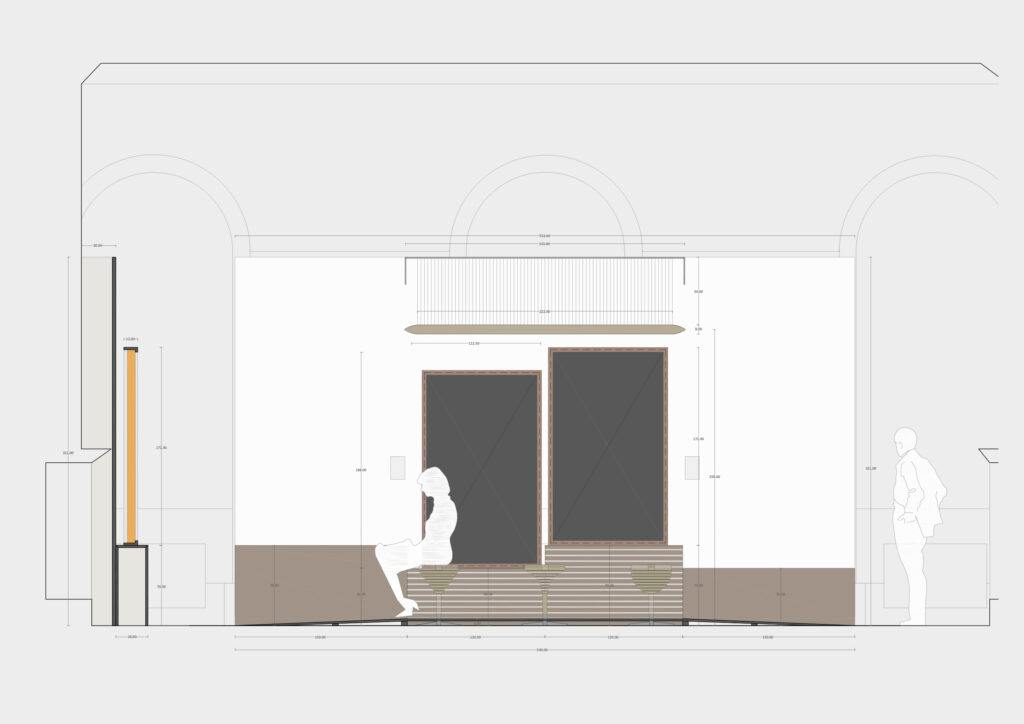
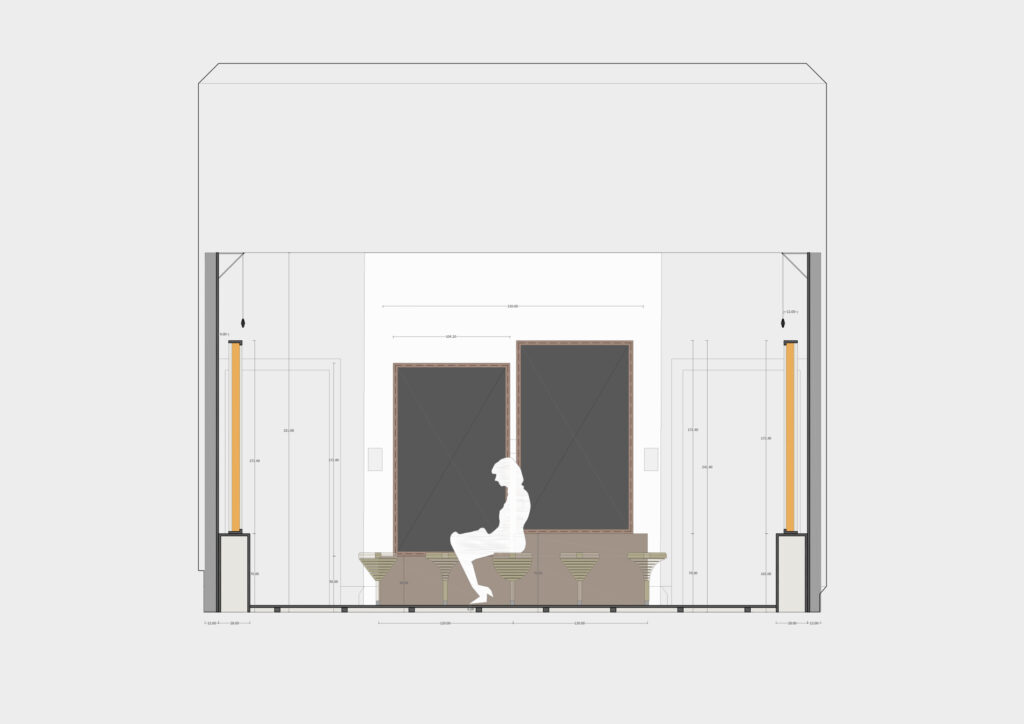
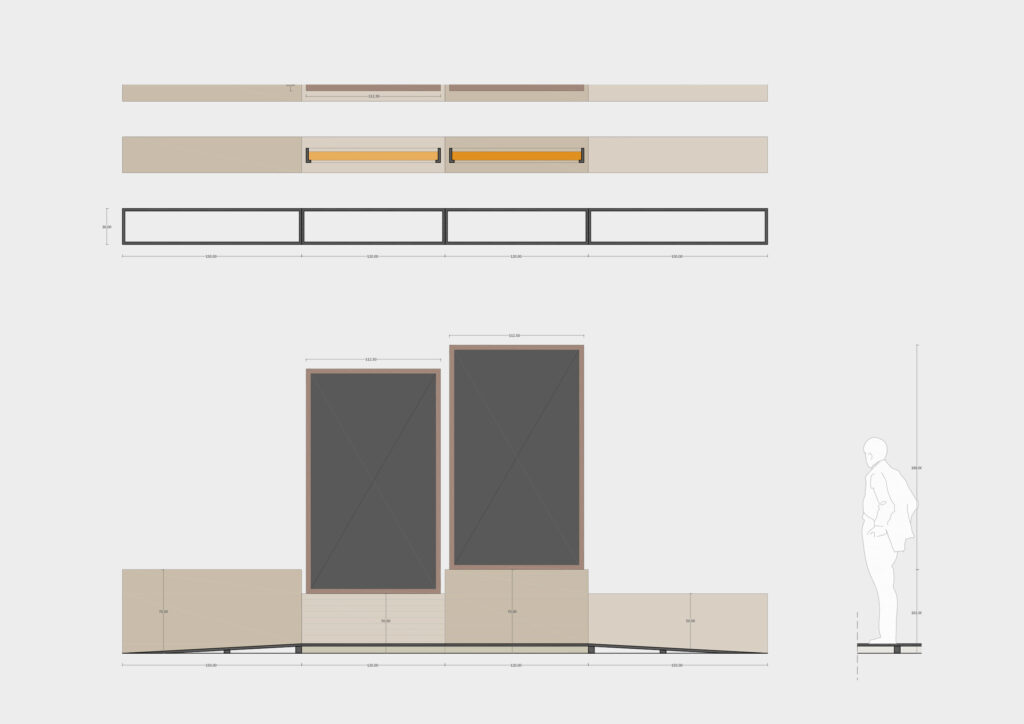
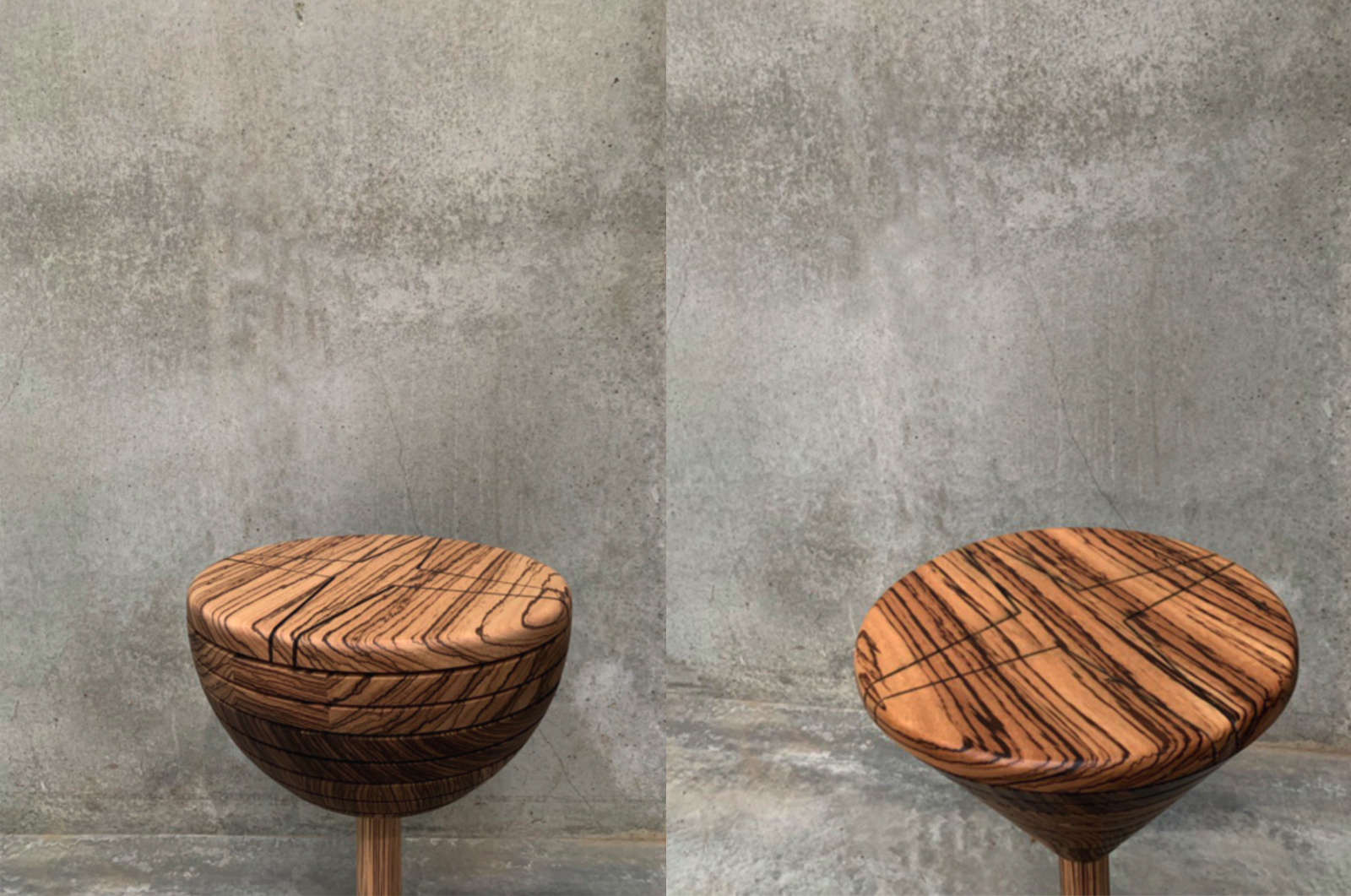
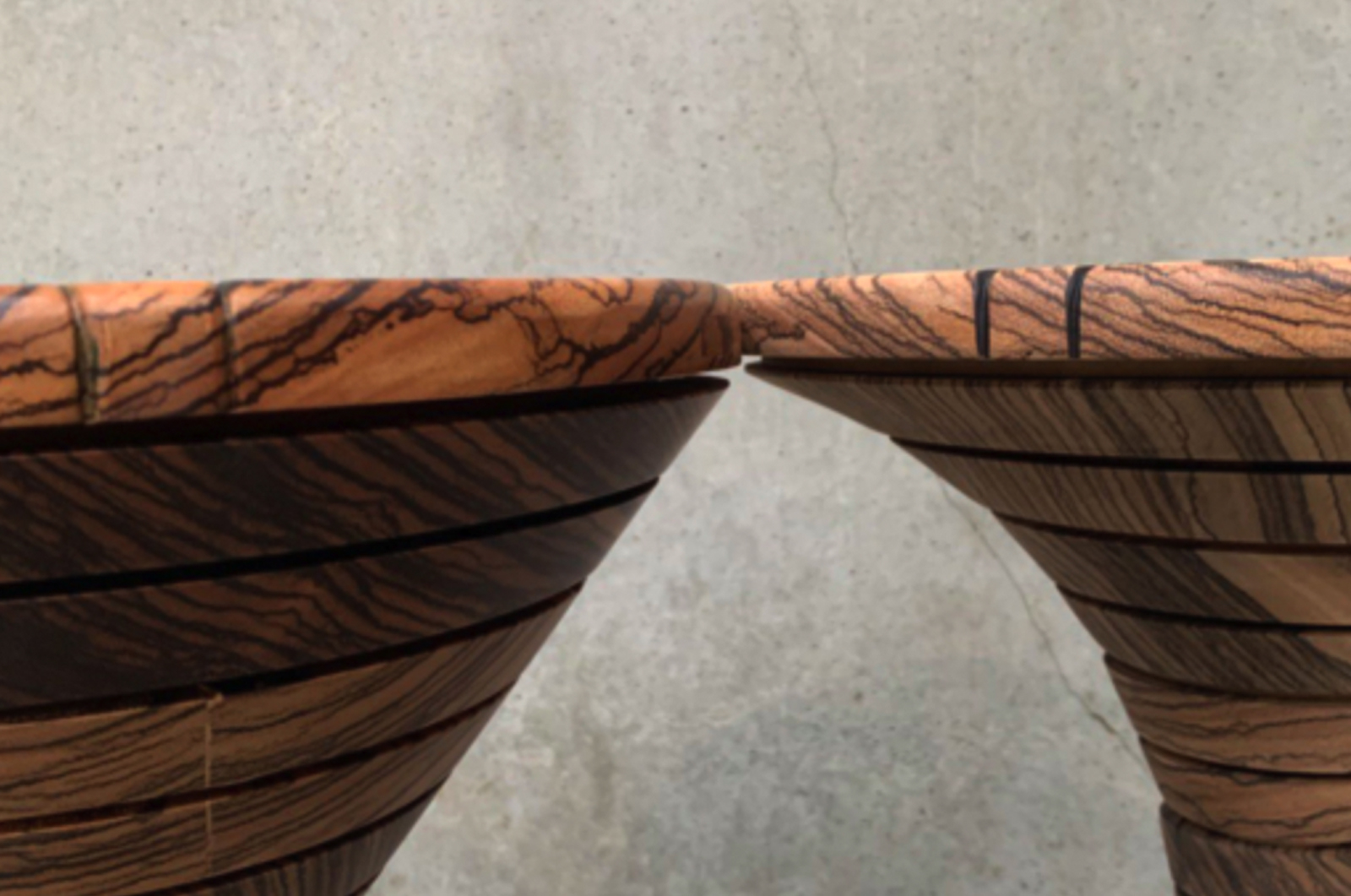
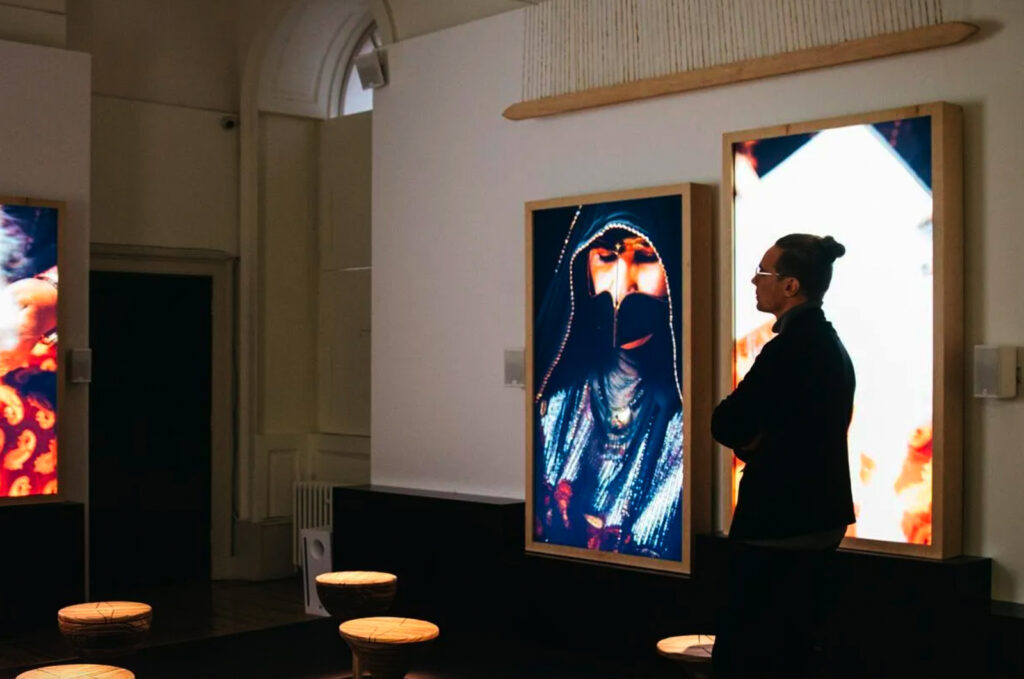
The exhibition features three types of stools, each consisting of a solid zebrano wood seat set on a metal leg clad in the same wood veneer. The leg is anchored into a wooden platform that conceals its lower section, giving the stools the appearance of oversized spindles.
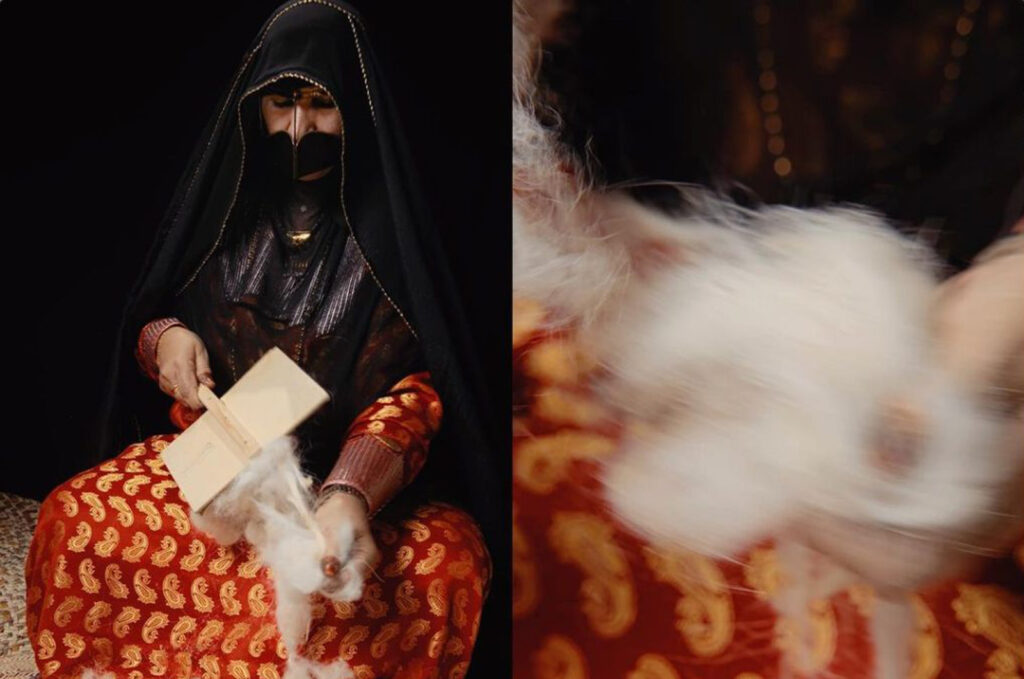
Around the seating area, a 270° video installation composed of six screens projects alternating images of a woman weaving the fabric. Sound plays a fundamental role in the exhibition: in the dimly lit space, the only audio comes from the noises of the weaving process itself—brushes, and the rhythmic movement of the loom.
La mostra è incentrata sulla produzione dell’Al Sadu, un tessuto tradizionale realizzato a partire dalla lana grezza di pecora. Nel corso dei secoli, i nomadi del deserto hanno sviluppato strumenti per velocizzare questo processo. Tra questi, il fuso — utilizzato per filare la lana grezza trasformandola in fili pronti per la tessitura — ha ispirato il design dell’installazione.
L’esposizione presenta tre tipologie di sgabelli, ciascuno composto da una seduta in legno massello di zebrano sorretta da una gamba metallica rivestita con la stessa impiallacciatura in legno. La gamba è fissata a una piattaforma lignea che ne nasconde la parte inferiore, conferendo agli sgabelli l’aspetto di fusi sovradimensionati.
Attorno all’area di seduta, un’installazione video a 270°, composta da sei schermi, proietta immagini alternate di una donna intenta a tessere il tessuto. Il suono svolge un ruolo fondamentale nella mostra: nello spazio in penombra, l’unico audio percepibile è costituito dai rumori stessi del processo di tessitura — le spazzole e il movimento ritmico del telaio.