
Kotobuki
Japan Society, New York City, 2025
Curated by: Miyeko Murase, Michele Bambling
Research: Naomi Kuromiya
Exhibition logistics: Stefani Oh
Gallery Interns: Yeeun Joo, Grace Kim, Stephanie Wang
Lighting Design: Takaaki Ando, Ayako Moriyama
Fabrication: Miles Huston, Sebastijan Jemec McKeever Donovan, Davide Balula
Installation & art handling: WittsART
Vinyl installation: DaSign Guy
Photo credits:
Exhibition: Andrew Romer
Opening Reception: Zhen Qin
Curtesy: Japan Society


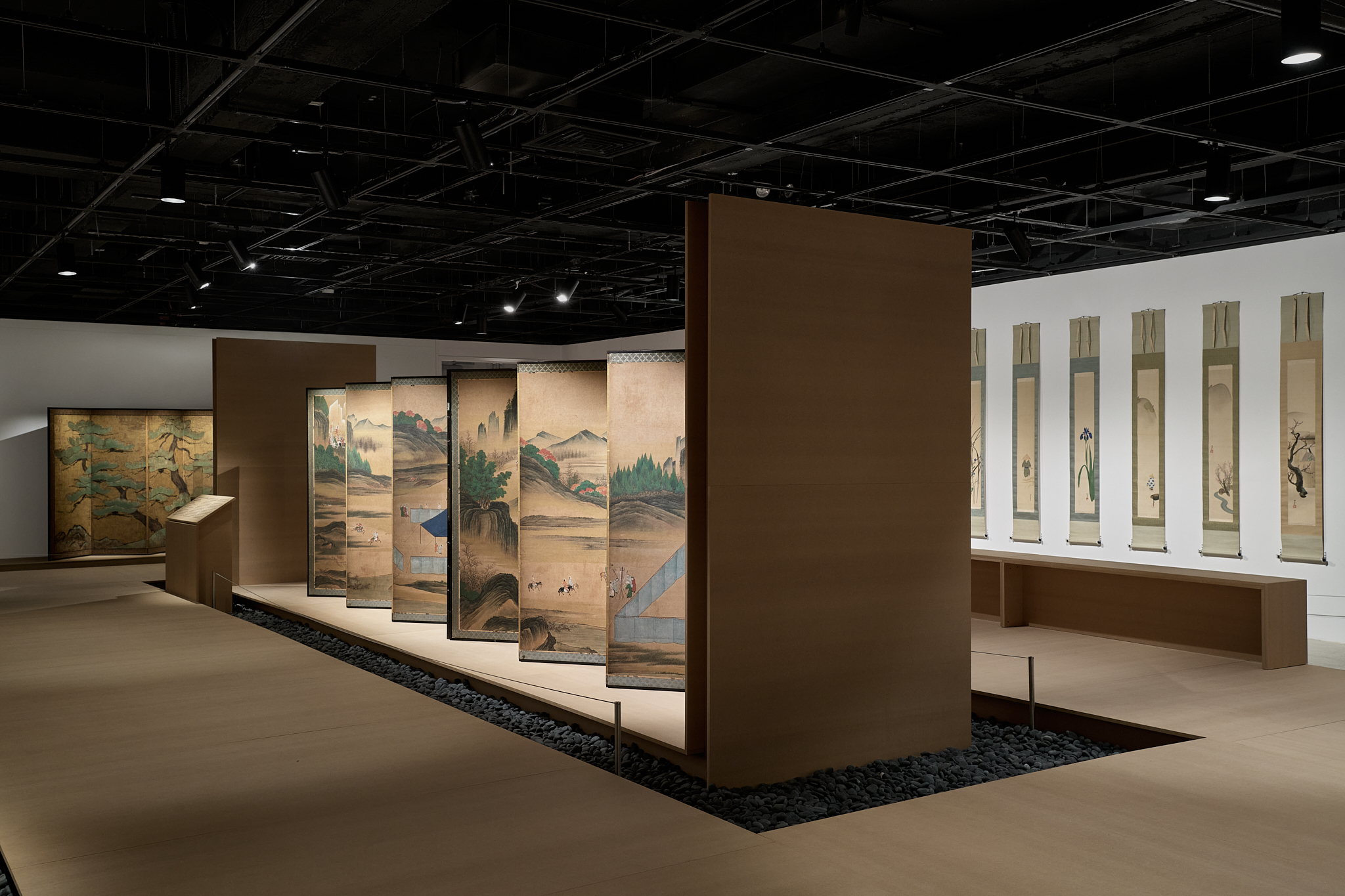


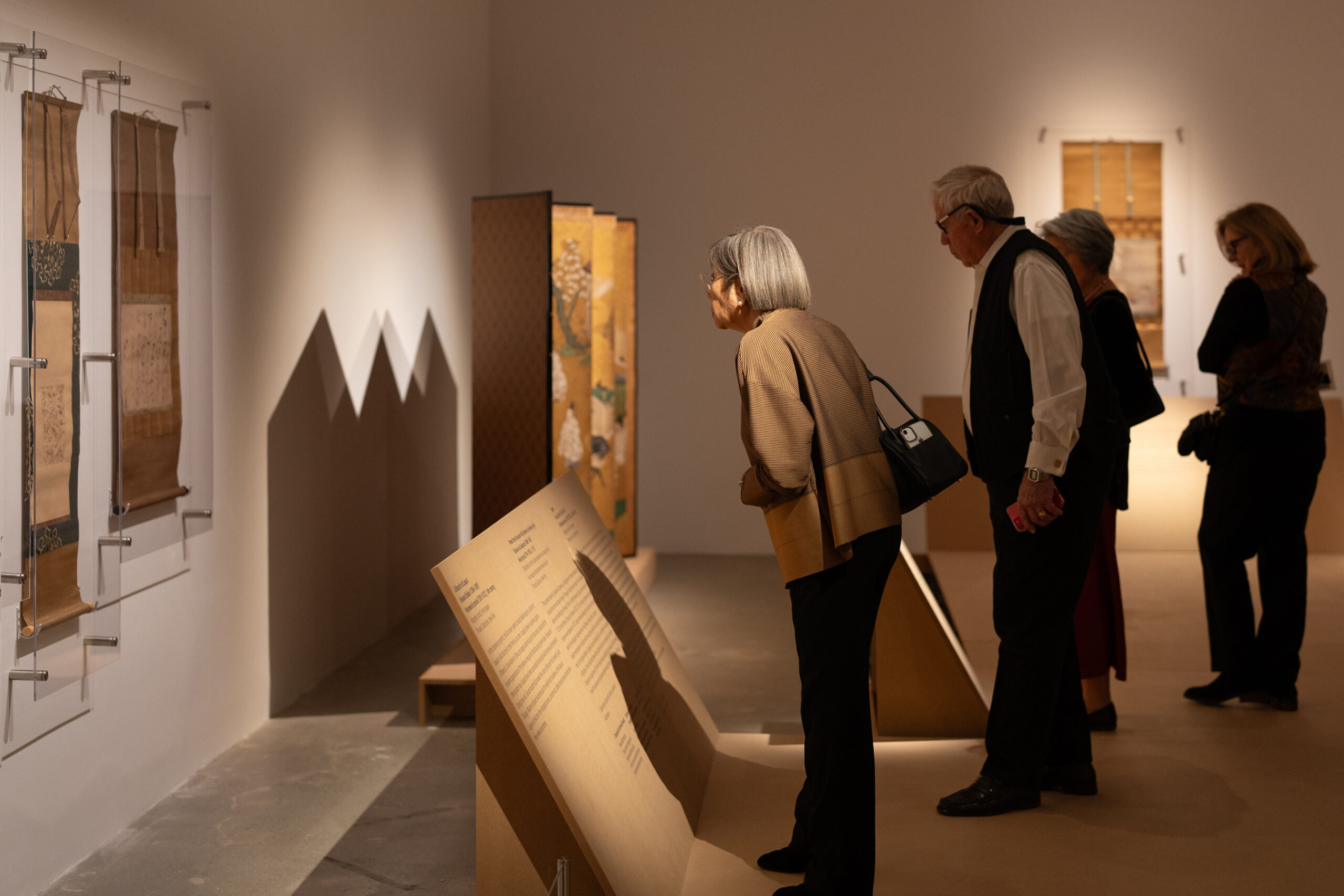


Kotobuki: Auspicious Celebrations of Japanese Art from New York Private Collections explores the theme of kotobuki—“celebration” or “long life”—through an exceptional selection of paintings, calligraphy, surimono prints, textiles, ceramics, and baskets spanning from the 12th to the 21st century. Curated by Dr. Miyeko Murase, Takeo and Itsuko Atsumi Professor Emerita of Japanese Art History at Columbia University, and Michele Bambling, the exhibition offers a rare glimpse into significant yet seldom-seen works from private collections in the New York City area.
The exhibition design unfolds as a journey through a sequence of distinct spatial environments. Visitors move through a landscape of private collections—assemblies of heterogeneous objects varying in material, scale, and content—brought together under the unifying theme of auspicious celebration.
The design takes inspiration from traditional Japanese bridges, whose forms often include recesses, unexpected turns, and an intrinsic dialogue with their surroundings. Similarly, the exhibition is structured around an elevated path that weaves through the galleries, threading its way among the works—some monumental, such as folding screens—while creating a choreography of movement and pause. This irregular progression evokes the meandering bends of a river, where the flow slows and stills, encouraging moments of quiet reflection.
The form of the exhibition is dictated by its content. Each object is housed in its own alcove—a carefully composed niche that invites the viewer to pause and engage. Protection of the artworks is a central concern: the raised pathway creates a subtle but deliberate physical separation between visitors and the displayed pieces. This distancing is further emphasized by architectural elements that double as interpretive tools—text panels and graphic supports conceived as folded planes, like origami, emerging from the floor itself. These structures simultaneously offer protection and convey contextual information.
Material and chromatic continuity play a key role in the experience. Given the high level of customization required to accommodate such diverse objects, the installation is unified through a disciplined palette: a single material—raw MDF—and a limited color scheme of beige and dark gray. The result is a kind of architectural palimpsest—a continuous surface that winds through the galleries of the Japan Society, offering both cohesion and calm, while allowing the artworks to emerge in quiet dialogue with their surroundings.
Kotobuki: Auspicious Celebrations of Japanese Art from New York Private Collections esplora il tema del kotobuki — “celebrazione” o “lunga vita” — attraverso una selezione eccezionale di dipinti, calligrafie, stampe surimono, tessili, ceramiche e cesti che spaziano dal XII al XXI secolo. Curata dalla Prof.ssa Dr. Miyeko Murase, Takeo and Itsuko Atsumi Professor Emerita di Storia dell’Arte Giapponese presso la Columbia University, e da Michele Bambling, la mostra offre una rara opportunità di ammirare opere significative ma raramente esposte, provenienti da collezioni private dell’area di New York.
L’allestimento della mostra si sviluppa come un viaggio attraverso una sequenza di ambienti spaziali distinti. I visitatori attraversano un paesaggio di collezioni private — assemblaggi di oggetti eterogenei per materiale, scala e contenuto — riuniti sotto il tema unificante della celebrazione propizia.
Il progetto trae ispirazione dai ponti tradizionali giapponesi, le cui forme includono spesso rientranze, svolte inattese e un dialogo intrinseco con il contesto circostante. Allo stesso modo, la mostra è strutturata attorno a un percorso sopraelevato che si snoda attraverso le gallerie, intrecciandosi tra le opere — alcune monumentali, come i paraventi — e creando una coreografia di movimento e pausa. Questa progressione irregolare evoca le anse sinuose di un fiume, dove il flusso rallenta e si quieta, favorendo momenti di silenziosa riflessione.
La forma della mostra è dettata dal suo contenuto. Ogni oggetto è collocato in una propria alcova — una nicchia attentamente composta che invita il visitatore a fermarsi e a osservare. La protezione delle opere è una preoccupazione centrale: il percorso rialzato crea una separazione fisica sottile ma intenzionale tra il pubblico e i manufatti esposti. Questa distanza è ulteriormente sottolineata da elementi architettonici che fungono anche da strumenti interpretativi — pannelli testuali e supporti grafici concepiti come piani piegati, simili a origami, che emergono direttamente dal pavimento. Queste strutture offrono al tempo stesso protezione e informazioni contestuali.
La continuità materica e cromatica svolge un ruolo fondamentale nell’esperienza. Considerato l’elevato grado di personalizzazione richiesto per accogliere oggetti così diversi, l’allestimento è unificato da una palette rigorosa: un unico materiale — MDF grezzo — e una gamma cromatica limitata al beige e al grigio scuro. Il risultato è una sorta di palinsesto architettonico — una superficie continua che si snoda attraverso le gallerie della Japan Society, offrendo coesione e calma, e permettendo alle opere di emergere in un dialogo silenzioso con lo spazio circostante.


