
Paper Museum
Arts and Craft Pavilion, Fabriano 2019
XIII UNESCO Creative Cities Network Annual Conference
UNESCO Goodwill Ambassador for Creative Cities: Maria Francesca Merloni
Exhibitions Manager: Vittorio Salmoni
Coordination: Gianluca Zuccaro
Contractor: Metal Design – Rome
Photos: Pierluigi Barile
Surface: 800sm



The design unfolds through a sequence of thematic areas, each dedicated to the artisanal process and its deep connection to local cultures. The narrative begins with the use of natural materials—the foundation of craft traditions—and expands to explore how these resources are shaped, transformed, and celebrated across different communities. The visitor is invited to follow this progression as a journey, where making is not only a technical skill but also a cultural expression rooted in place.
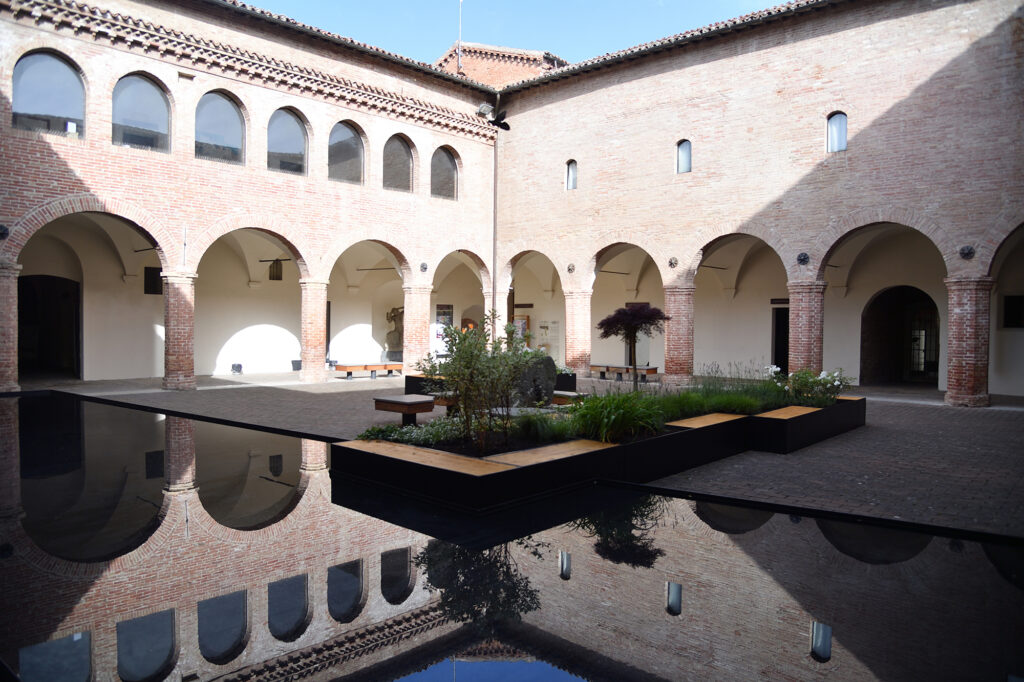
At the heart of the project lies the museum’s main cloister, reimagined as the UNESCO Garden. This garden hosts plant species that are emblematic of the Creative Cities network, each one a living ambassador of the territories from which it originates. Together, they form a botanical map that reflects both diversity and interconnectedness, underscoring the role of nature as the primary source of inspiration for human creativity.
Alongside the garden, a slender reflecting pool has been introduced, conceived specifically for the event. Designed to collect and store rainwater, it embodies principles of sustainability while simultaneously heightening the spatial experience of the cloister. Its mirror-like surface doubles the architecture and vegetation around it, producing an ever-changing play of reflections that shifts with the time of day and the seasons. By expanding the perception of space, the pool creates a meditative atmosphere, encouraging visitors to pause and contemplate.
Through this interplay of natural elements, cultural references, and architectural gestures, the project transforms the cloister into a place of encounter and reflection—a living installation where the values of heritage, sustainability, and creativity converge.
At the center of the cloister, a long metal podium is positioned to take full advantage of the natural light. Designed as a focal point, the podium serves as a display base for the Carrara marble sculptures, further enhancing the connection between material, place, and tradition.