
Structures of Memory
Venice, 14. Biennal of Architecture, 2014
General Curator: Rem Koolhaas
Curators: Michele Bambling, with: Adina Hempel, Marco Sosa
Client: Salama Bint Hamdan Al Nahyan Foundation
Organization: National Pavilion UAE
Contractor: Tosetto Allestimenti
Lighting: iGuzzini
Graphics: Sarah Alagroobi
Photo: Mohamed Somji, curtesy National Pavilion UAE
Surface: 250sm
Collaborators: Simona Tartaglia, Anita Sala


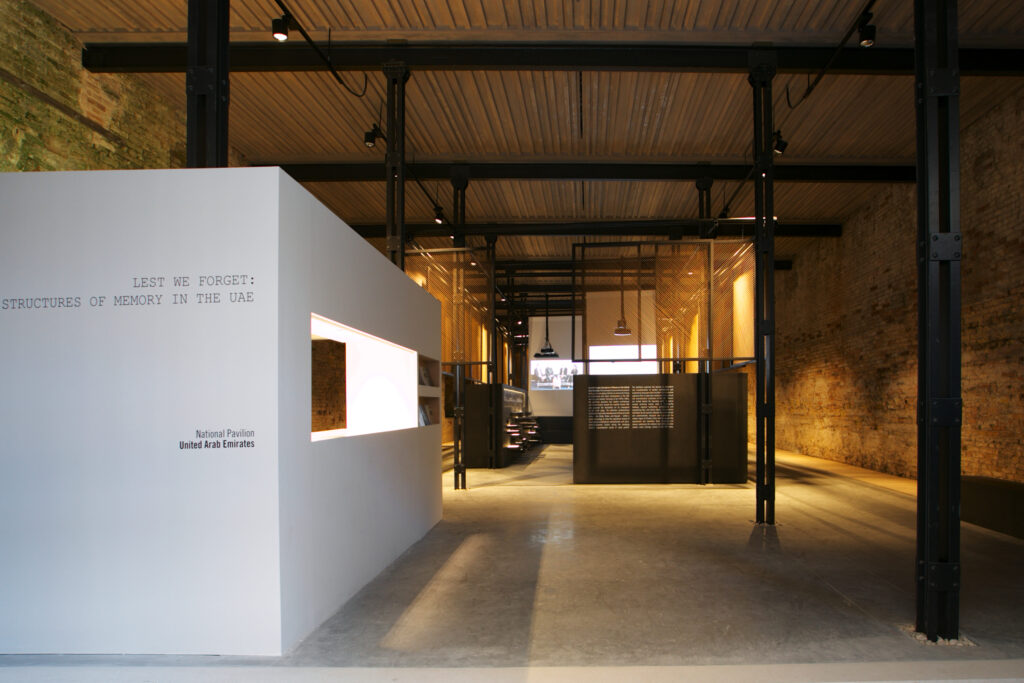
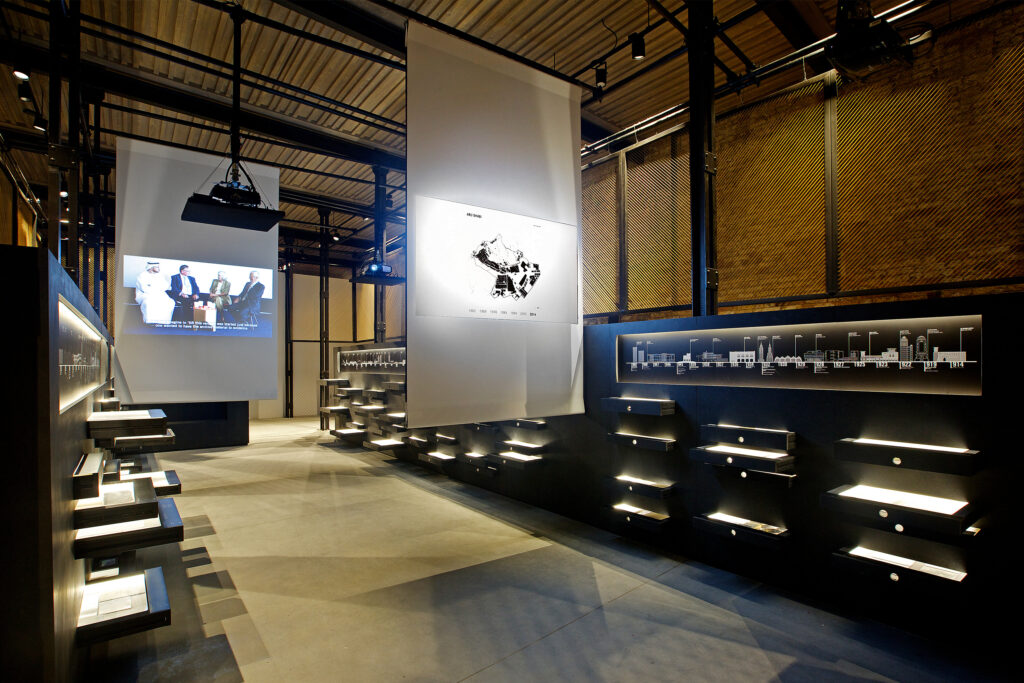

The curatorial vision was physically embodied in the design of the Pavilion. Lest We Forget seeks, on one hand, to evoke the private dimension of the Arab domestic space and, on the other, to narrate the evolution of architecture in the UAE through an interactive archive.
The traditional “closed” layout of Emirati homes was reinterpreted through an external structure—1.8 meters high—completely opaque when viewed from the outside. This shell recreates the experience of moving from a public domain into an intimate, almost sacred space. Inside, 76 drawers house artifacts and documents carefully selected by the curatorial team.
The drawer—both a domestic element and an interactive object—serves as the fundamental unit of the installation. Visitors engage directly with the archive by opening drawers, each offering a unique entry point into personal and collective histories, metaphorically “kept in a drawer.” These drawers are arranged diachronically, allowing stories to emerge non-linearly, depending on how visitors interact with the installation. No single narrative dominates; instead, meaning unfolds through individual discovery.
The UAE’s architectural heritage—rooted in nomadic culture and characterized by impermanent structures built from adobe and dried palm leaves—is echoed in the installation’s material language. The archive is encased in a lightweight structure made of wood and steel frames, wrapped with 7 kilometers of hemp cord. The woven pattern of the cord references the texture of traditional areesh huts.
This enclosure forms a delicate, almost immaterial membrane that responds to the movement of visitors. Its varying degrees of transparency shift with perspective, reinforcing the installation’s central themes of memory, privacy, and transformation.

